This event has now taken place but you can watch the video recording of it through our Youtube Channel, get to it by clicking the button below
When
Thursday 14th May 2026, 6:00PM-7:00PM UK timeWhere
Online via Zoom.Format
There'll be a great line-up of speakers plus ample scope for discussion and debate.About this event
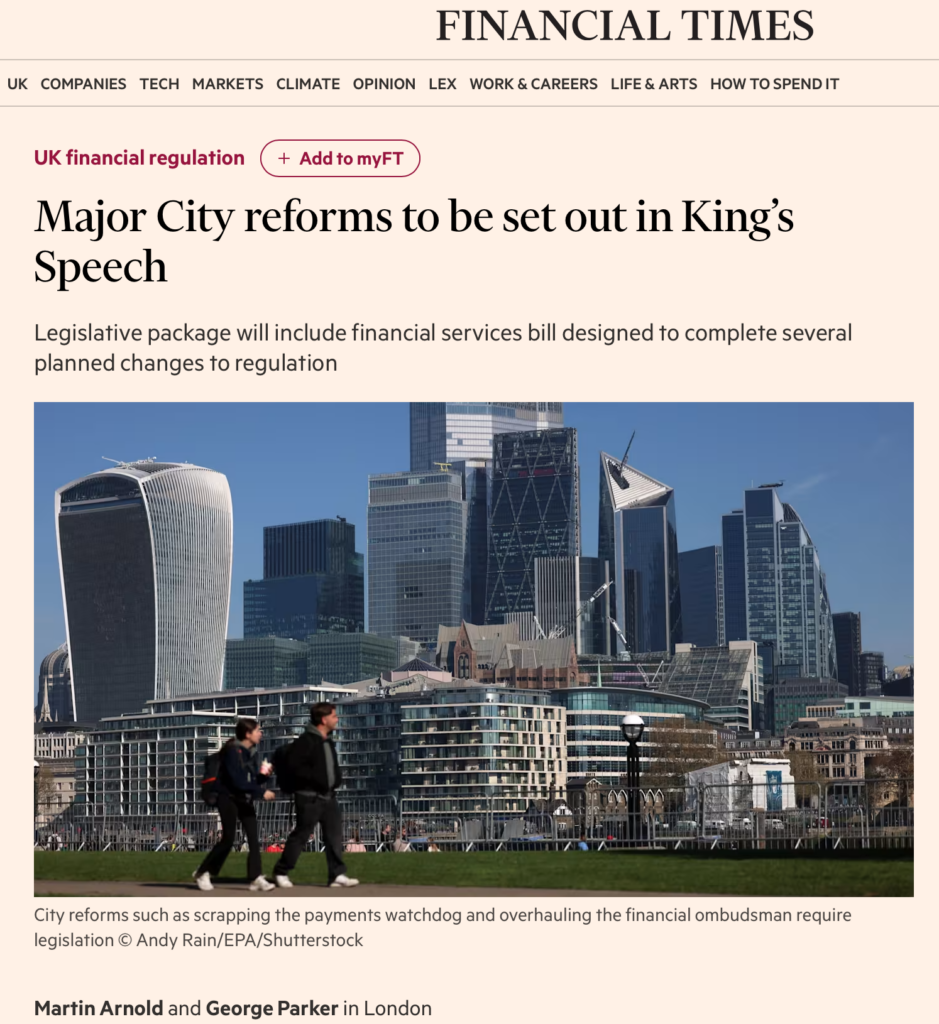
On 13 May 2026, King Charles III will deliver the King’s Speech, setting out the UK government’s legislative agenda for the new parliamentary session. For those of us who care about fair, transparent and accountable financial services, it will be a pivotal moment – but also a potentially alarming one.
A headline piece of legislation is going to be the Financial Services Bill, widely trailed in the Financial Times, Bloomberg and across the regulatory press. On the surface, it presents an opportunity to modernise how consumers are protected. But beneath the language of “competitiveness” and “regulatory simplification” lie proposals that campaigners believe could seriously weaken the architecture of consumer protection that has been painstakingly built over decades.
The day after the King’s Speech, the Transparency Task Force community will convene to take stock – to understand what has been announced, what it means for ordinary consumers, and crucially, what we can do about it as the Financial Services Bill begins its passage through Parliament.
We will be working hard to build support for reforms, and therefore and to build the broadest possible coalition of support for the changes that are needed.
The issues we are watching – and why they matter
Weakening the Financial Ombudsman Service
The Bill is expected to “reform” the Financial Ombudsman Service – but reform for whom? Industry lobbying has been intense, and there is a serious risk that changes to the FOS’s jurisdiction, dismissal grounds and case fee structures will tilt the balance away from consumers and towards firms. An ombudsman that cannot robustly adjudicate in favour of consumers is an ombudsman in name only.
We will examine what the government has proposed, what has already been consulted on, and what amendments are needed to preserve a genuinely independent and potent Financial Ombudsman Service.
The Consumer Duty is not a duty of care – and it should be
The FCA’s Consumer Duty is frequently misrepresented as a “duty of care.” It is not. It is merely a regulatory benchmark – an FCA Handbook standard – that consumers cannot themselves enforce in court. If a firm causes harm to a consumer by breaching the Consumer Duty, that consumer cannot bring a private legal action for damages. The Consumer Duty is, in effect, a tool for the regulator, not for the consumer.
We believe the Consumer Duty must be replaced or supplemented by a legally binding, privately actionable duty of care – one that is enforceable directly by consumers in civil courts. And it is worth remembering that it wasn’t just the Transparency Task Force that drew attention to the fact that the Financial Conduct Authority failed to comply with Parliament’s instruction for the regulator to introduce a Duty of Care; so too did the Bar Council, as you can read here.
And what about introducing a Fiduciary Duty?
It is interesting to note that many consumer interests are taken care of in the USA through it having fiduciary duty legislation. A fiduciary duty is a strict legal and ethical obligation for one party (the fiduciary) to act in the best interests of another party (the principal or beneficiary i.e. the client) rather than themselves. It requires loyalty, honesty, and care, requiring the fiduciary to avoid conflicts of interest and unauthorised profits.
Would trust and confidence in the UK’s financial sector be boosted if our consumers also had the benefit of a fiduciary duty? And if so, would such a move help to stimulate growth in the sector too? – we think it would.
The PSR merger – who protects payment consumers?
The proposed merger of the Payment Systems Regulator into the Financial Conduct Authority raises real questions about whether payments-specific consumer protections – including the landmark authorised push payment fraud reimbursement regime – is at risk of being diluted in the process. We will look at the risks and what safeguards need to be written into the Bill.
Motor finance redress – will Parliament let consumers down?
The FCA’s £7.5 billion motor finance redress scheme is one of the largest consumer compensation programmes in UK history. The Bill’s passage through Parliament creates a real risk that industry-sympathetic amendments could undermine or delay consumers’ ability to receive what they are owed. We will consider how to guard against this.
Consumer Credit Act reform – protecting the architecture of consumer rights
The government’s phased reform of the Consumer Credit Act 1974 – the foundation of many statutory consumer rights, including Section 75 protections – risks handing powers from Parliament to the FCA rulebook, where they may be harder to defend. We will assess whether this modernisation threatens or preserves fundamental consumer rights, and what needs to be secured in primary legislation.
Who should attend
This event is for the full Transparency Task Force community – campaigners, consumer advocates, researchers, journalists, legal professionals, parliamentarians, current and former regulators, financial advisers, and anyone who believes that a fair financial system demands genuine accountability to consumers, not just to the market.
Why this matters
The upcoming Financial Services Bill may well be one of the most important pieces of legislation for consumers in a generation. Whether it strengthens or weakens their rights will depend on what happens during its parliamentary passage – and that is where our community can make a real difference. Join us the evening after the King’s Speech to help shape what comes next.

Andy Agathangelou
Founder, Transparency Task Force;
Chair, Secretariat Committee, APPG on Investment Fraud and Fairer Financial Services; Chair of the Violation Tracker UK Advisory Board; Founder, RSA’s Responsible Finance for Good Network


Mark Bishop